The healthcare and learning science behind a 15-minute game.
Plenty of "educational" kids' games end up in the closet after one round. Plenty of healthy-habit toys feel like homework with stickers on. We built Squirrel Squad to sit on neither shelf.
Underneath the slap, the yells, and the cartoon Grumps, there's a deliberate layer of pediatric and learning science. This page is what's down there.
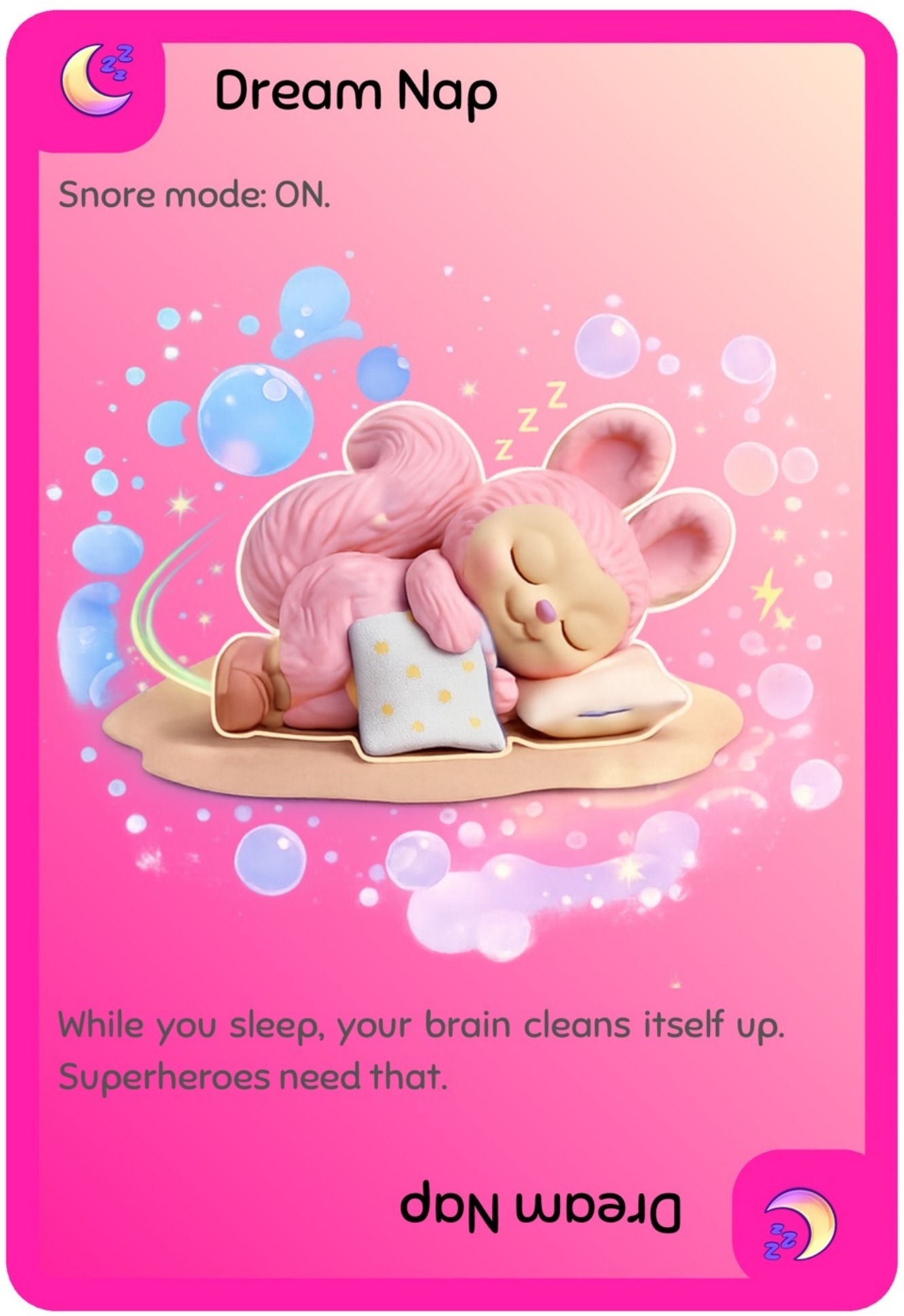
Kids 4-9 need 9-12 hours of sleep a night. At this age, sleep debt shows up as emotional dysregulation before it shows up as fatigue. Tantrums, meltdowns, the 5pm cliff โ most are sleep, not "behavior."
Consistent bedtime is the single highest-leverage parental intervention in pediatric wellness research. Squad cards normalize the routine instead of fighting it.
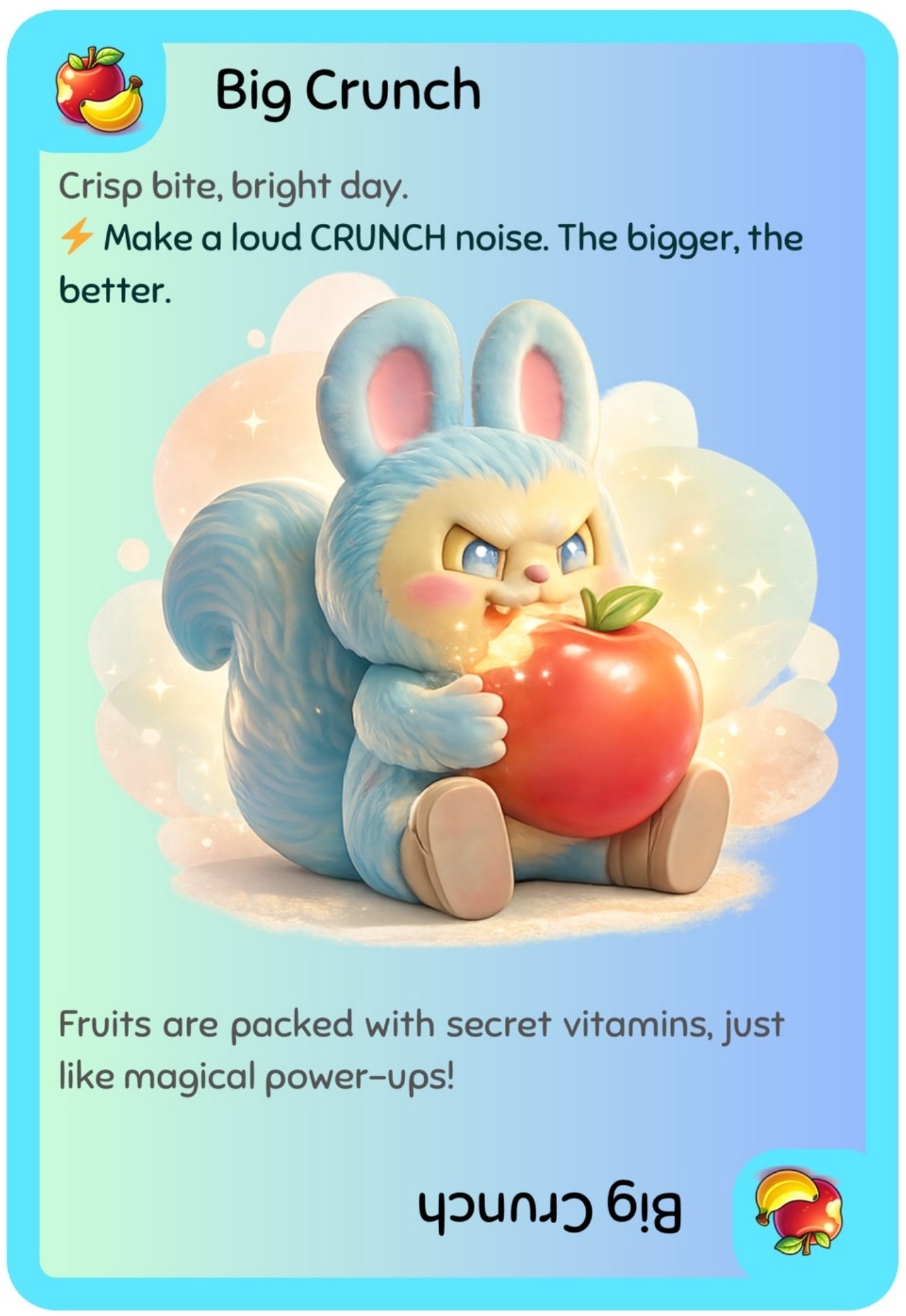
"Eat your veggies" doesn't move the needle. One bite, repeated does. The food suit teaches micro-behaviors โ a crunch, a sip, a swap โ at the level habits actually form.
Food preference at age 4-9 is set by exposure repetition (Birch & Marlin's "10-15 exposures" rule), not by reasoning with a kid about nutrition.
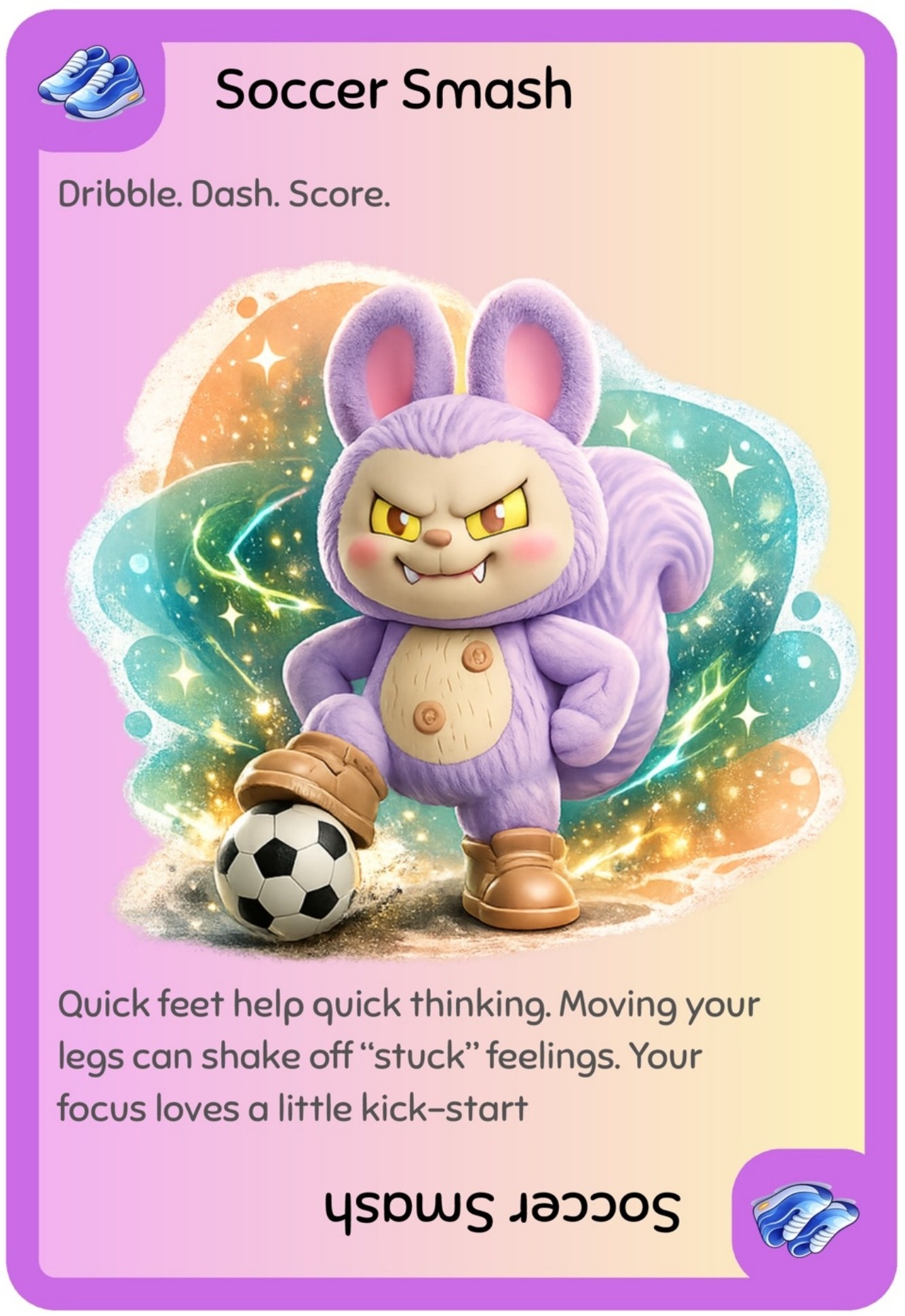
The move suit is the densest with bonus actions โ the moments that make you flex, hop, wiggle, breathe. Movement at the table, not at the gym.
Acute physical activity (even 10-30 seconds) measurably improves attention and mood in children. The bonus actions are micro-doses of that effect, dropped into game flow.
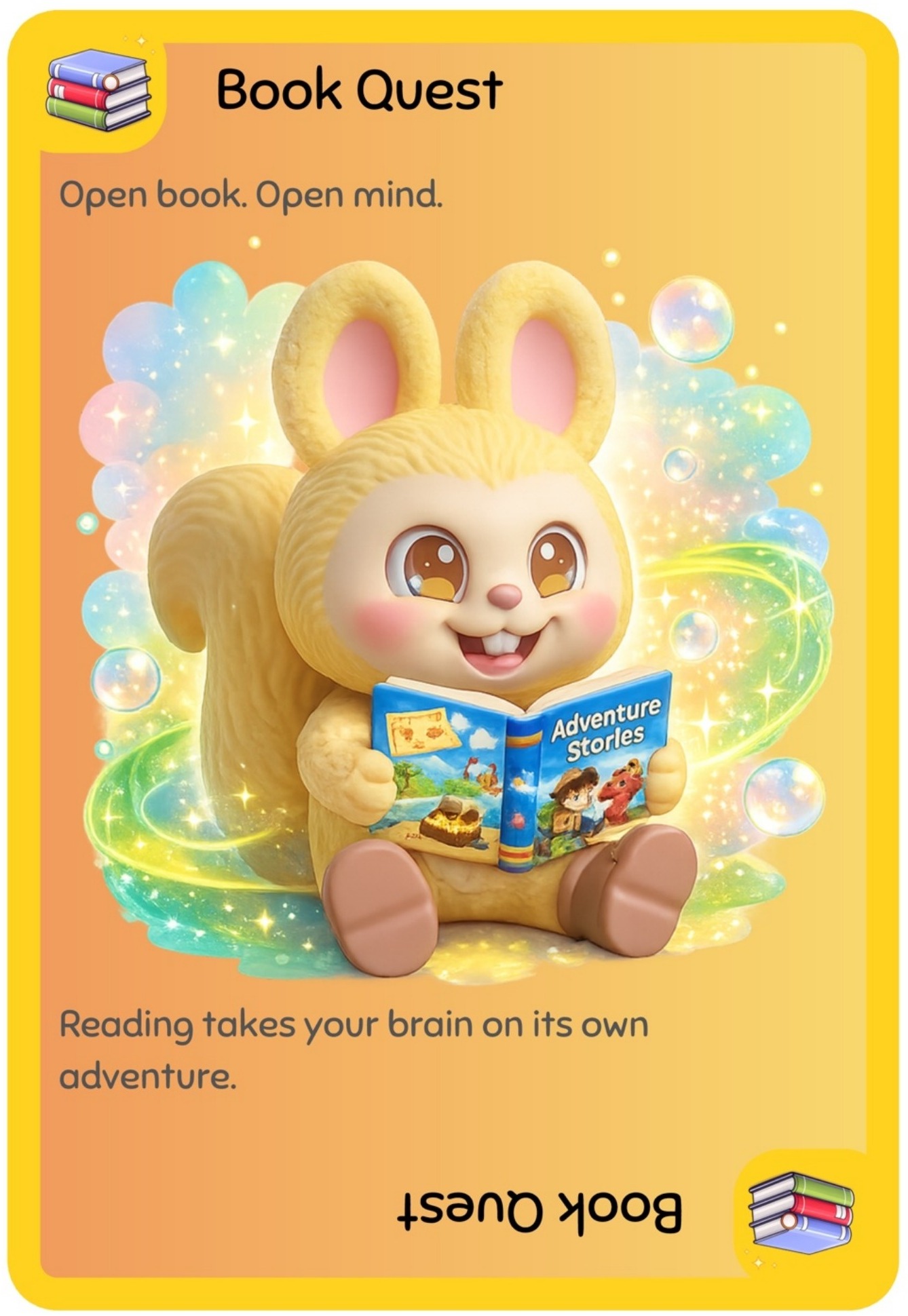
Curiosity, focus, persistence โ the learning suit covers what most kids' games skip. Kids learn that thinking is a habit too, not a chore.
Self-determination theory: kids who choose to engage build executive function faster than kids who are coaxed. The whole game is built on that one finding.
Kids learn what they do, not what they're told. Card games are spaced repetition disguised as a Tuesday night. Same habits, surfaced again and again, never as instruction.
Physical action during learning encodes deeper than passive reading. The NOOOO Race and bonus actions aren't decoration โ they're the memory-fixing layer.
Sticker charts work until the stickers stop. Games kids choose to play again sustain. Self-determination theory in five words: autonomy beats bribery, every time.
Ages 4-9 is the developmental window where habits set fastest. The deck dose-matches that โ short rounds, age-appropriate language, no shame, no scare tactics.
Each card teaches at the micro-behavior level. Big Crunch isn't "eat healthy" โ it's "make the crunch loud." Bed Ready isn't "good sleep hygiene" โ it's "PJs on, world off." That distinction is the whole point.
Tablet apps reward staring. Squad rewards eye contact, reading the room, regulating yourself. 15 minutes around a table beats 45 minutes of scrolling.
External rewards extinguish behavior the moment they stop. Squad sustains because kids ask to play it. The game is the reward.
Most kids' card games are dragons, animals, dinosaurs. Fine, fun, vibe-only. Squad is the same fun + a real curriculum: the four pillars of pediatric wellness.
"Edutainment" usually means a quiz with cartoon framing. Kids smell it instantly. Squad keeps the lesson silent โ fun first, learning second, never announced.
Healthy habits become a card game kids ask to play again. Ages 4+. 54 cards. 15 minutes a round.
Shop now โ